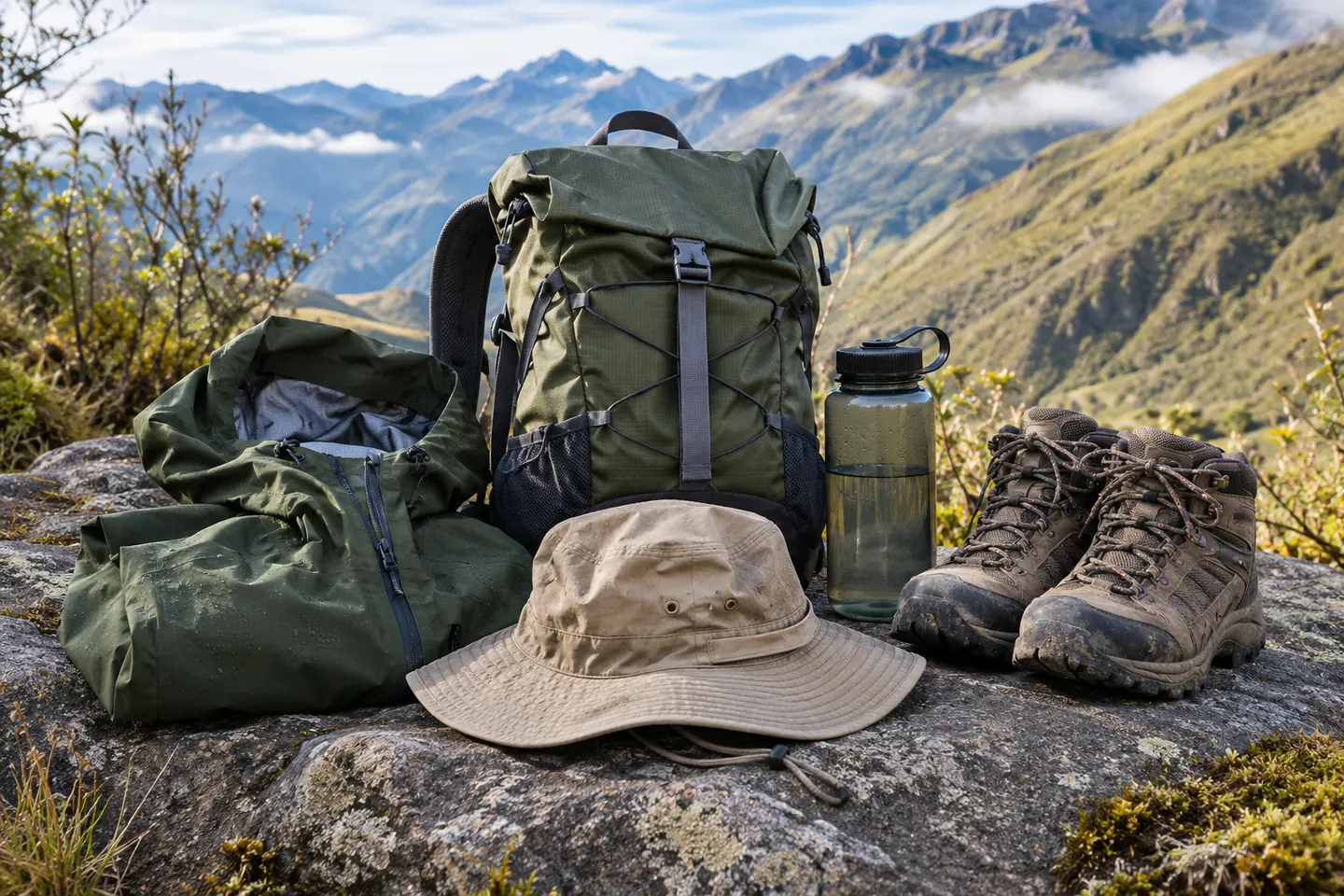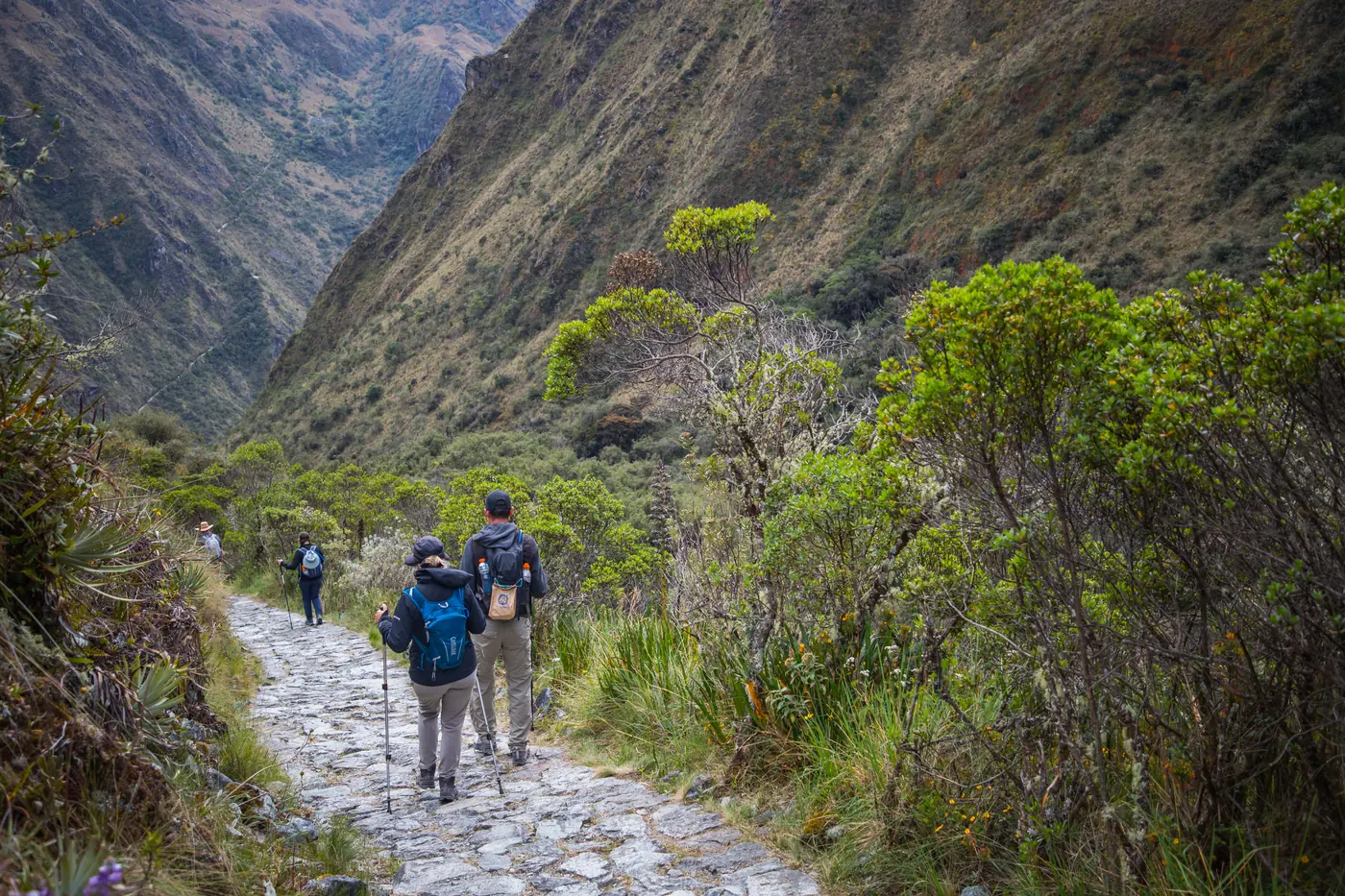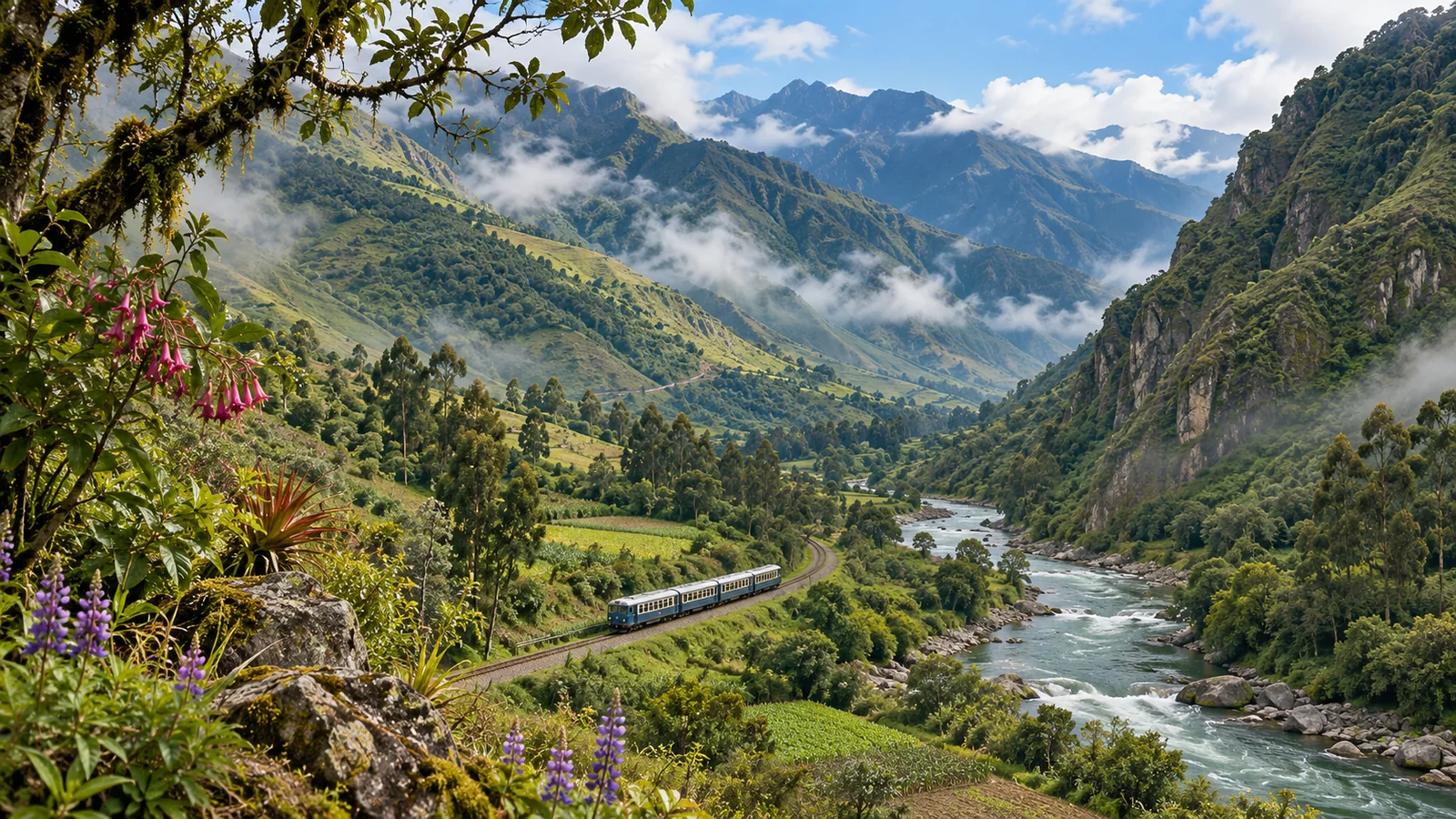
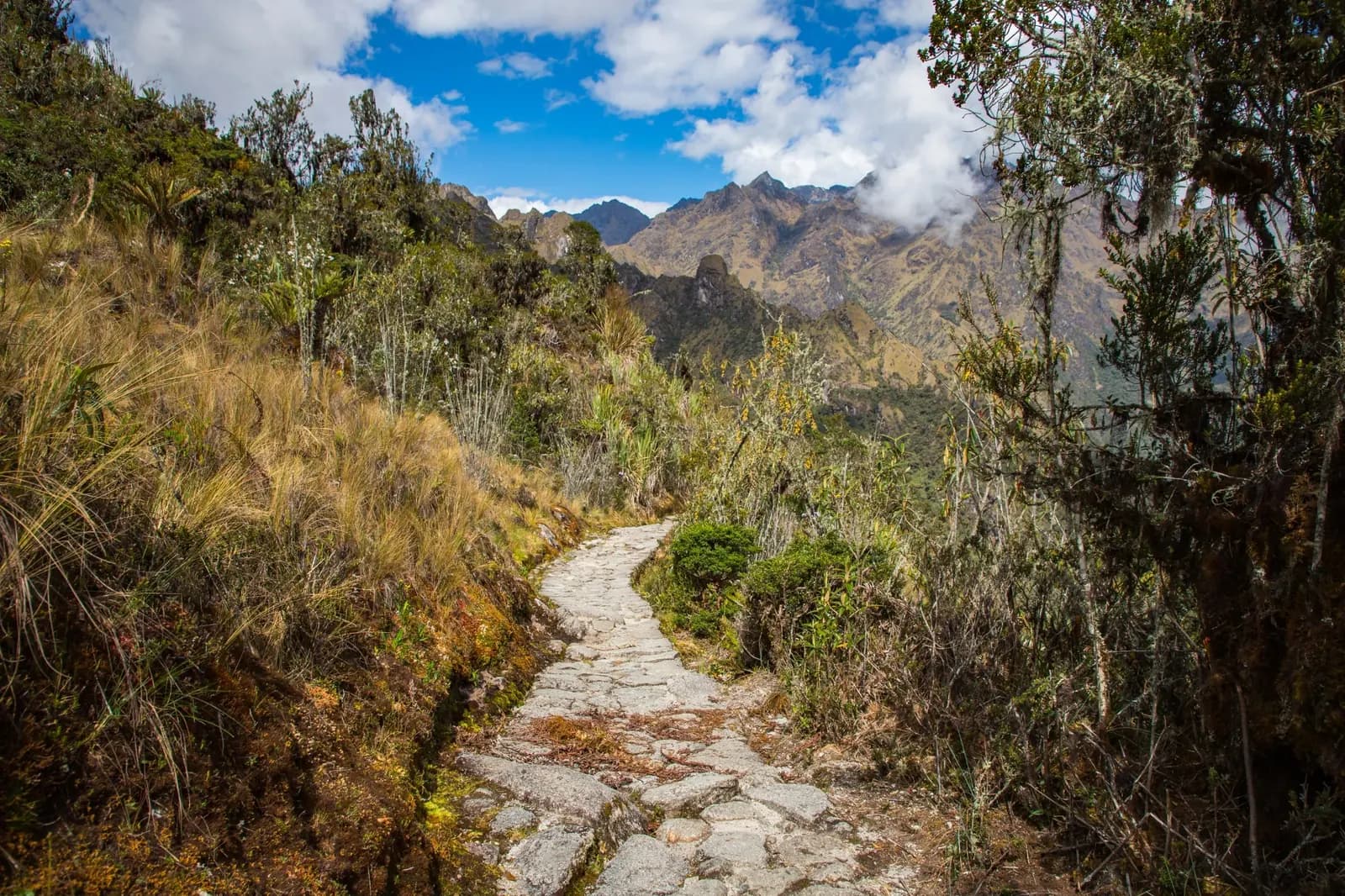
Choosing between the Inca Trail and Salkantay is not only about the fame of each route. The right decision usually appears when you compare the rhythm of the journey, the kind of landscape that inspires you, and the way you want to experience your arrival at Machu Picchu.
Inca Trail: more history, more symbolism, more regulation
The Inca Trail offers a narrative that is hard to match. You walk along a historic path, cross archaeological sites on the way, and reach Machu Picchu through the Sun Gate with a very ceremonial feeling. It is also a route with limited permits, strict regulation, and extremely high demand.
If you value cultural weight, the iconography of the classic trek, and an operation that rewards early booking, this is usually the closest fit.
Salkantay: wider scenery and a stronger expedition feel
Salkantay delivers a more expansive experience. The scenery changes quickly, combining glaciers, deep valleys, and strong climate transitions. It does not have the same archaeological emphasis as the Inca Trail, but it offers a much broader sense of immersion in nature.
For travelers who want a visually intense crossing and a more adventurous reading of the journey, it is often a very powerful alternative.
What to look at before deciding
- Your training level and tolerance for altitude.
- How far in advance you plan to travel.
- Whether you prioritize historical heritage or high-mountain scenery.
- The overall tone of the trip: symbolic, classic, or more exploratory.
When the decision is made with context, the booking stops being a gamble and becomes a route that genuinely reflects the way you travel.
Check the route, not just the name
The classic Inca Trail and Salkantay are not interchangeable labels. The official Historic Sanctuary guide documents the Inca road network and its archaeological sectors. A Salkantay itinerary may connect to Machu Picchu in a different way; do not assume the same entry route, permit, or final approach. Ask your operator for the precise route map and entrance products for your date.
| Question | Inca Trail | Salkantay |
|---|---|---|
| Main draw | Historic Inca road and archaeological sites. | High-mountain scenery and changing ecosystems. |
| Verify | Trail permits, checkpoint, overnight plan, Machu Picchu circuit. | Exact trek variant, transport to Machu Picchu, circuit, overnight plan. |
| Do not assume | Every itinerary has identical camps or train arrangements. | Every itinerary reaches Machu Picchu through the Sun Gate. |
Before you book either trek
Compare day-by-day walking times, elevation profile, accommodation, meals, luggage support, guide ratio, cancellation terms, and the plan for weather or access changes. If you have a fixed travel date, ask which permits and admissions are actually available. A transparent itinerary is more valuable than a generic promise of adventure.
Which trek matches your travel style?
Choose the classic Inca Trail when archaeological sites and a defined historical approach are your priorities. Choose a Salkantay itinerary when changing mountain scenery matters more to you than following the classic road. This is a preference, not a claim that one trek is universally easier: difficulty depends on the exact route, daily elevation gain, weather and your preparation.
The official sanctuary visitor guide describes several Inca road routes, while the Ministry of Culture lists their variants. Use those references to ask better questions, not to assume your booking includes every site they mention.
| Decision point | Classic Inca Trail | Typical Salkantay trek |
|---|---|---|
| Main experience | Inca road, archaeological sites and a regulated sanctuary route. | High-Andean scenery and a route whose final approach varies by itinerary. |
| Before paying | Confirm the exact route, permits, Machu Picchu ticket and circuit. | Confirm the variant, transfers, lodging and Machu Picchu ticket and circuit. |
| Best fit | Travelers who prioritize history and a specific arrival experience. | Travelers who prioritize mountain landscapes and itinerary flexibility. |
Five questions to send the operator
- Which exact trail, starting point and final approach are included?
- Which permits and Machu Picchu circuit are confirmed for my date?
- How much walking and elevation change is planned each day?
- What is included in meals, lodging, luggage support and return transport?
- What changes if weather, access or availability disrupts the route?
For a concrete benchmark, review the day-by-day plan of our four-day Inca Trail tour. Compare that written plan with any Salkantay offer rather than relying on a headline or a single price.
Plan for altitude and a realistic schedule
Both options involve high terrain. A few comfortable days in the region can help you plan a gradual start, but they do not guarantee protection from altitude illness. The CDC's high-altitude guidance explains why ascent profile and personal history matter. If you have a medical condition or past altitude illness, seek individualized advice before booking.
Finally, compare a trip's total duration, not just the hiking days. Transfers, the Machu Picchu visit and the return to Cusco can change how a route feels. The better choice is the itinerary you understand well enough to commit to with confidence.
Frequently asked questions
Does the Salkantay Trek use the same permit as the Inca Trail?
No. The classic Inca Trail uses a limited permit for its own protected trail network. Salkantay has a different itinerary. If that trip includes Machu Picchu, confirm the separate citadel ticket and circuit.
Which route is better if I want to avoid camping?
Compare the lodging listed for each night. The classic four-day Inca Trail is a camping trek; some Salkantay itineraries use lodges or other fixed accommodation, but it varies by operator.
Which option is easier to move to a different date?
Compare the terms and availability on your actual dates. Inca Trail permits limit flexibility; a Salkantay itinerary may have more departure options, but your citadel entry, trains and lodging still constrain changes.